

In this article, Christine Edwards QTLS explores what strong quality in FE looks like when evidence, professional judgement and organisational capability are connected. She considers assessment readiness, inclusion and workforce development through a simple but demanding test: does the evidence an organisation gathers help people understand what learners are experiencing, decide what needs to change and know whether that change has worked?
Quality can become very visible when an organisation is preparing for inspection, reviewing performance or responding to a concern.
Evidence is gathered. Data is scrutinised. Processes are checked. Files are sampled. People are asked whether practice is consistent.
All of that matters.
But none of it is where quality begins.
Quality begins much earlier, in the everyday decisions that determine what learners actually experience.
It is there when an educator notices that someone has not understood and changes the explanation.
When an assessor questions whether a task is really testing what it is supposed to test.
When a manager spots a pattern in attendance rather than treating individual absences as isolated events.
When feedback from a learner results in something changing.
When people feel able to challenge practice that does not seem to be working.
And increasingly, it is there in how organisations respond to change.
New technology, new policy, new expectations and new approaches to assessment can all generate new processes. But producing a process is not the same as embedding effective practice.
That distinction matters.
Evidence is not the same as insight
Most education and training organisations generate significant amounts of evidence.
They have policies, procedures, dashboards, progress reviews, assessment records, learner feedback, observation activity, quality reports and improvement plans.
Each can tell us something.
But the existence of evidence should not be confused with evidence of impact.
A policy may evidence intent.
A process may evidence implementation.
A record may evidence activity.
Quality asks the harder question: what impact did it have – for whom, and how do we know?
That requires us to move beyond proving that expected activity has taken place.
What changed?
What did people experience?
Were there differences between different learners or groups?
What did we learn?
What happened next?
This is where quality assurance becomes something more valuable than evidence collection. It becomes organisational intelligence.
The question shifts from:
Can we prove what happened?
to:
Can we understand what needs to happen next?
That is a much more demanding test of a quality system.
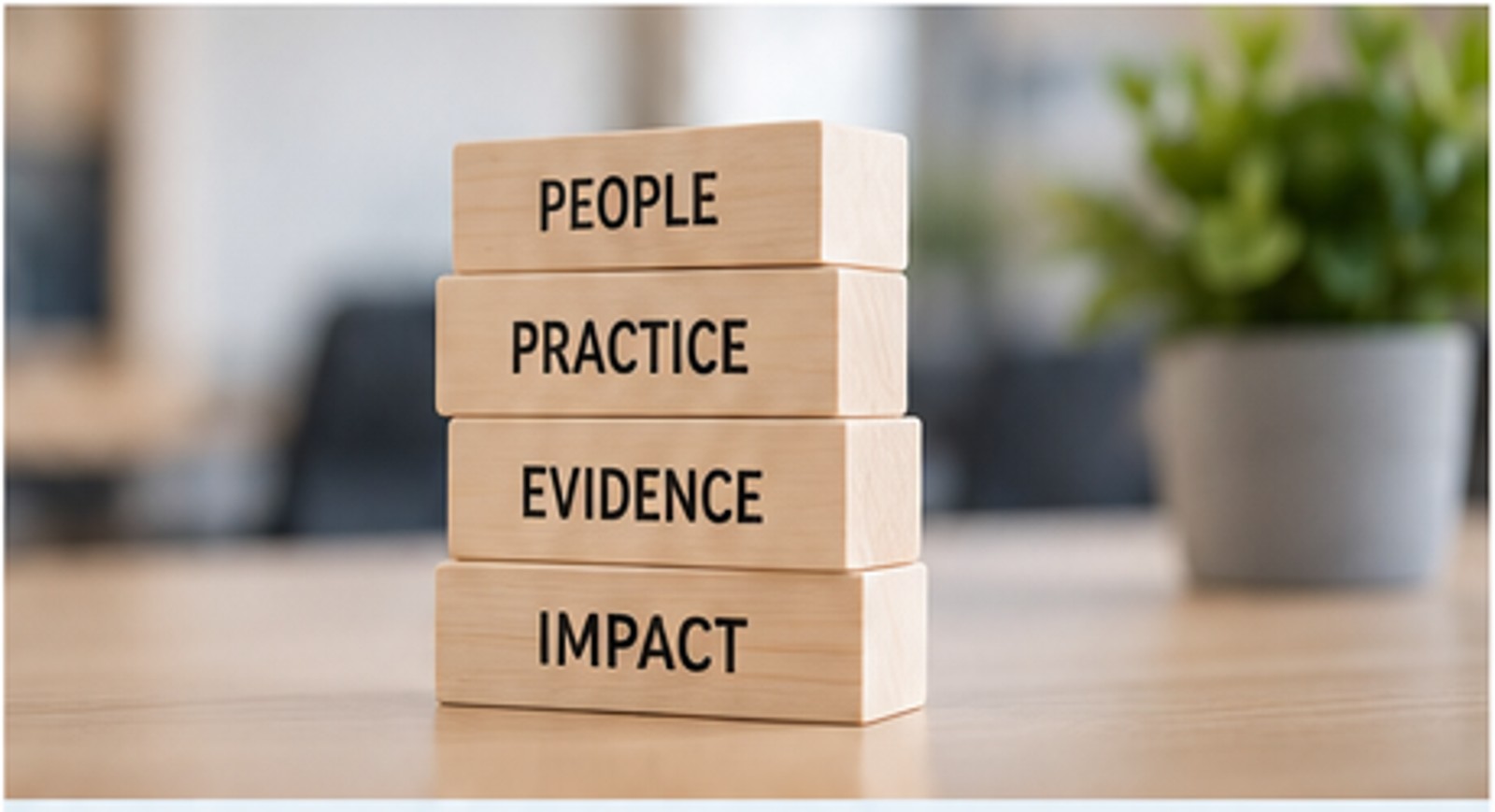
Quality is experienced before it is evidenced
The Department for Education’s work on powerful pedagogy provides a useful reminder that effective practice in further education is not built around isolated techniques.
Strong teaching draws on subject and occupational knowledge, questioning, dialogue, feedback, scaffolding, reflection, authentic application and the relationships that allow challenge to take place safely.
But it also depends on organisational conditions.
People need opportunities to develop expertise, engage in meaningful professional learning, talk about practice and exercise professional judgement.
That matters because quality is sometimes discussed as though it can be assured separately from workforce capability.
It cannot.
A quality framework can describe expectations. A procedure can establish what should happen.
A dashboard can indicate where something may be going wrong.
But ultimately, somebody has to recognise what the information means and know what to do about it.
That capability cannot simply be assumed.
Educators bring their own knowledge, confidence and previous experiences to their roles, just as learners do.
Someone can be occupationally expert without automatically feeling equally confident supporting Maths or English development, recognising a digital capability gap, responding to Maths Anxiety, developing employability skills, or adapting learning for someone experiencing SEND or SEMH-related barriers.
Yet these things do not sit outside vocational or occupational learning waiting for somebody else to deal with them.
They affect whether people can participate, learn, perform and progress.
This is where dual professionalism matters. Organisations need educators who understand their occupational specialism and can recognise and support the wider capabilities learners need to succeed within it.
That does not mean expecting everybody to become a specialist in everything.
It means knowing what capability a role requires, what somebody already brings, where development is needed, and when specialist expertise should be involved.
And that raises an interesting quality question.
Training needs analysis is in itself a form of assessment.
We assess learners to establish what they know, understand and can do, where there are gaps, and what development is needed next.
How consistently do we apply the same discipline to the people responsible for developing and supporting them?
Professional learning is therefore not something sitting alongside quality. It is part of the quality infrastructure of an organisation.
If a quality system identifies weakness but the organisation has not developed people’s capability to respond to it, what exactly has the quality process achieved?

Assessment readiness is not about having the paperwork ready
The same distinction applies to assessment.
Assessment readiness can easily become associated with compliance: appropriate documentation, clear processes, standardisation, internal quality assurance and evidence that decisions have been made correctly.
Those things remain important.
But there is a more fundamental question underneath them:
Is the assessment giving us valid and useful evidence of what the learner knows, understands and can do?
That principle is hardly new. The Assessment Reform Group defined assessment for learning more than two decades ago around using evidence to determine where learners are in their learning, where they need to go and how best to get there. It also positioned assessment as an everyday professional skill rather than simply an end-point activity.
The technology surrounding assessment may have changed dramatically, particularly when considering the use of AI. But the fundamental quality question has not.
AI simply makes some of the weaknesses more visible.
Jen Deakin’s work on assessment in the age of AI challenges organisations to think beyond detection and surveillance and examine assessment design itself.
If an assessment can be completed successfully without making the learner’s understanding, application or professional judgement sufficiently visible, the issue is not simply whether AI has been used. It may be telling us something about the assessment.
Submitted work can remain useful evidence, but the product alone may no longer tell us enough. Process, dialogue, authentic application and visible judgement can help us understand what the learner can explain, defend, adapt and apply.
That moves the quality conversation beyond detection.
The question becomes whether the assessment is still capable of producing valid evidence of learning.
Assessment should change what happens next
There is another connection here that is easy to overlook.
Assessment is valuable because it informs action.
A diagnostic assessment that identifies a misconception but results in no change to learning is an activity.
A progress review that identifies declining participation but does not prompt anybody to explore what may be happening is a record.
A training needs analysis that identifies a workforce capability gap but is not followed by meaningful professional development is a process.
The quality comes from what happens next.
This is particularly important when evidence sits in different parts of an organisation.
Attendance may sit on one dashboard.
Attainment somewhere else.
SEND information in another system.
Learner feedback is reviewed through a different process.
Employer feedback, assessment performance and progression may be considered at different times by different people.
Individually, each may be monitored carefully.
Collectively, they may be telling us something much more important.
Triangulation should not simply provide more evidence.
It should help us see more.
And once something significant has been seen, the quality question becomes what the organisation does about it.
Inclusion is a test of whether the quality system works
This is why inclusion cannot be treated as an additional strand of quality.
Neither can Maths, English, digital capability, employability or the support people need to participate successfully in learning.
They are part of the learning experience.
Current Ofsted arrangements reinforce that direction. Inclusion is now evaluated at whole-provider level, with inspectors expected to consider how effectively providers identify and respond to barriers experienced by learners and apprentices, and the difference that support makes. But inspection should not be the reason organisations do this.
The learner experience should be.
A support plan demonstrates that a need has been recognised and an intention established.
The learner experiences what happens next.
Was teaching adapted?
Was the barrier reduced?
Could the learner participate more effectively?
Was the educator sufficiently confident and capable to provide the support required?
Did the intervention work?
Was it reviewed?
Did somebody notice if it did not?
And critically, consistency does not necessarily mean sameness.
A consistently inclusive organisation may need people to respond differently because learners encounter different barriers and bring different experiences, confidence and capabilities with them.
A support plan is evidence of intention.
The learner experience is evidence of implementation.
That is not an inclusion issue sitting alongside quality.
It is evidence of whether the quality system works.
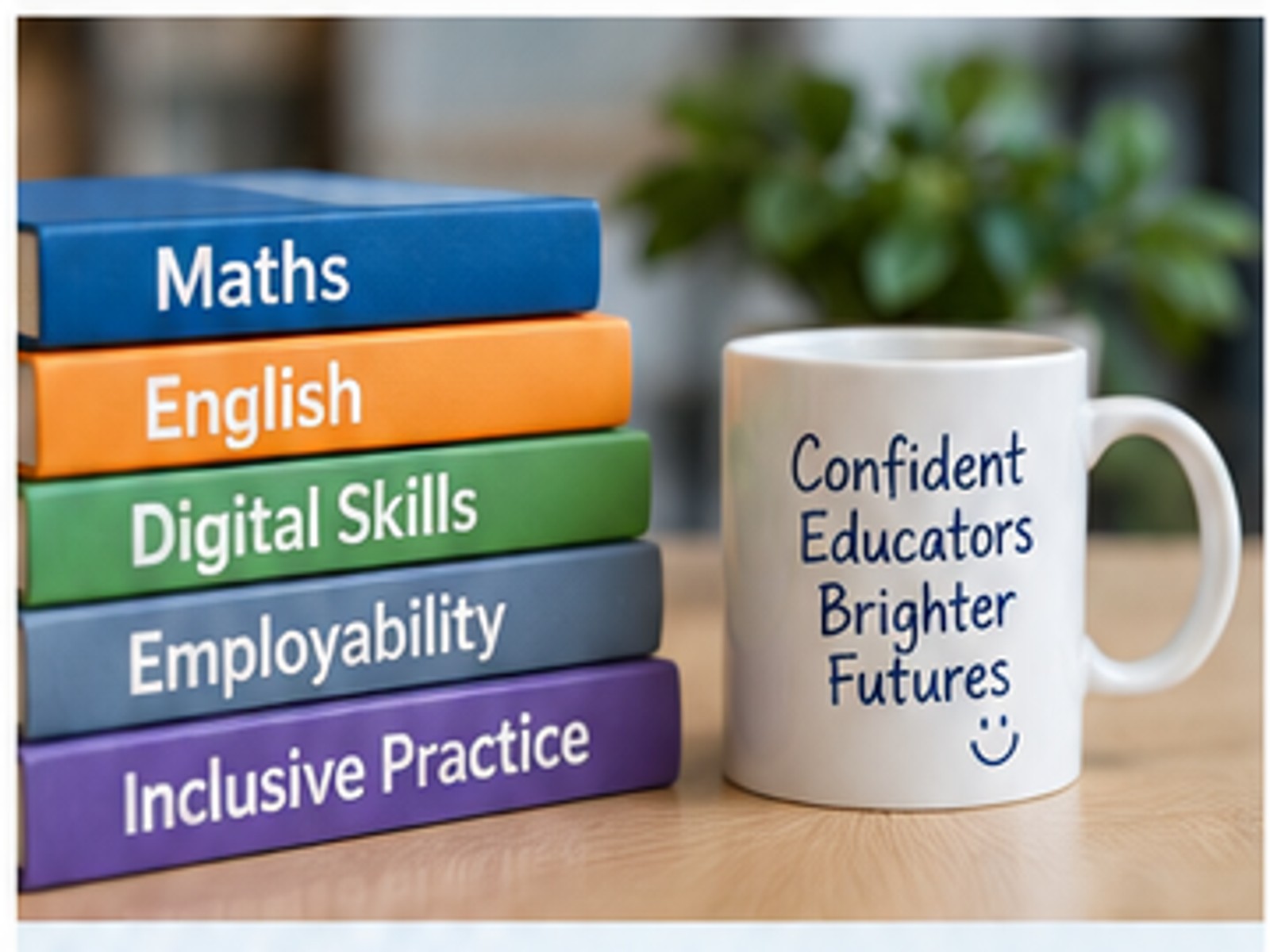
The same quality discipline operates at every level
There is a useful parallel here.
With learners, we ask:
– What do they know and understand?
– What can they do?
– What is getting in the way?
– What do they need next?
With our workforce, we should be asking:
– What knowledge and capability do people already have?
– Where are they confident?
– Where are the gaps?
– What development or specialist support do they need next?
And at organisational level:
– What were we trying to achieve?
– What is actually happening?
– Who is experiencing it differently?
– What is the evidence telling us?
– What needs to change next?
Different contexts.
The same quality discipline.
Purpose. Evidence. Interpretation. Response.
This is also where technology needs to be treated carefully.
In my recent work on practical AI for teaching and learning, one of the recurring distinctions has been between activity and quality.
The fact that AI is being used tells us very little about whether it is being used well.
The same is true of assessment systems, CPD, learner support and quality processes.
Activity is not impact.
What matters is the quality of the professional judgement surrounding it and whether what happens next improves learning.
Strong quality cultures notice things early
Perhaps one of the most useful tests of organisational quality is not what happens when everything is working.
It is what happens when somebody notices that it isn’t.
– Can educators question something?
– Can learners say that an approach is not working?
– Can assessors raise uncertainty without feeling they should already know the answer?
– Can somebody admit they are not confident supporting a particular aspect of learning and expect development rather than judgement?
– Can managers hear challenge without immediately becoming defensive?
– Can teams discuss mistakes before they become recurring problems?
A mature quality culture should make it easier for organisations to discover uncomfortable information, not harder.
Because the earlier an issue becomes visible, the greater the opportunity to learn from it.
That requires more than a feedback framework.
It requires the conditions in which professional curiosity, challenge, development and reflection are normal parts of everyday work.
So, are we assessment ready?
Perhaps that is the wrong question if it is asked only when an external event is approaching.
A stronger set of questions might be:
– Do our assessments still give us valid evidence of learning?
– Do our educators understand what good practice looks like and have the capability to exercise professional judgement?
– Do we know where workforce capability is strong and where further development is needed?
– Do our systems help us connect information, recognise emerging barriers and decide what needs to happen next?
– Are Maths, English, digital capability, employability and inclusion genuinely part of learning, or do they still disappear when somebody feels they belong to someone else?
– Can people safely question practice that does not appear to be working?
– Can we show not only what we intended to do, but what changed as a result?
– And would learners recognise the quality we describe in our reports in the experience they have every day?
If the answer to those questions is clear, inspection or external scrutiny should not require an organisation to manufacture a picture of quality.
It should require it to explain a picture that already exists.
Because quality does not begin when the evidence is assembled.
It begins in the everyday practice that creates the evidence in the first place.
If your organisation is reviewing assessment readiness, workforce capability, inclusive practice or how quality evidence is used to drive improvement, get in touch to discuss how Creating Excellence can help strengthen the everyday practice behind the processes.