
If inclusion is capability rather than compliance,
the real question becomes:
What does powerful pedagogy in Further Education actually look like in everyday practice?
This is where many improvement conversations stall – particularly in the translation from strategy into everyday practice.
Not because the evidence is missing –
but because it isn’t consistently translated into practice.
In this article, Christine explores what powerful pedagogy in Further Education looks like in practice and why it often breaks down when conditions are not ideal. She examines the gap between evidence-informed teaching and what actually happens in the classroom, showing how variation in practice becomes a key indicator of organisational capability, not just individual teaching.
Why Evidence-Informed Teaching in FE Doesn’t Always Translate into Practice
Across Further Education, there is no shortage of pedagogical knowledge.
Staff are familiar with:
– retrieval practice
– scaffolding
– modelling
These approaches are widely discussed, embedded in CPD, and reflected in expectations.
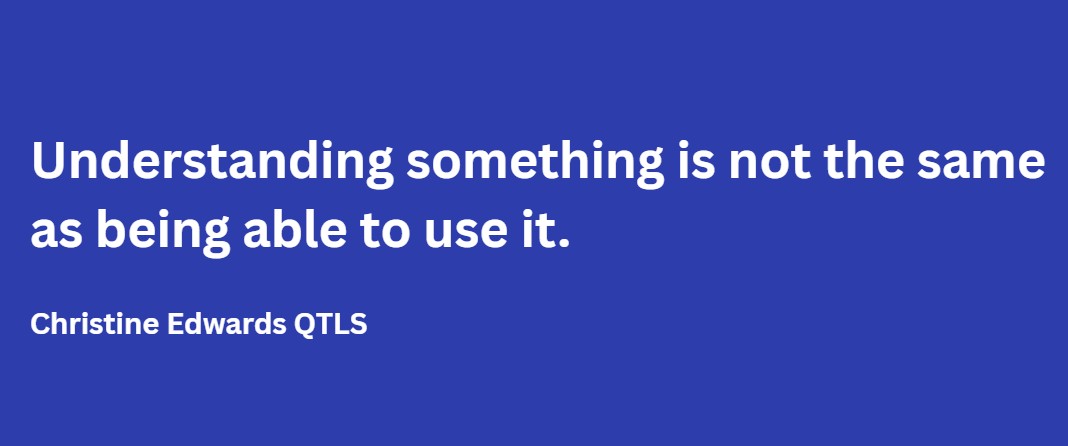
But understanding a concept is not the same as being able to apply it consistently, in real time, with real learners.
When Pedagogy Breaks Under Pressure: A Simple Example from Questioning
One of the simplest ways to see this gap in practice is through questioning.
Many teachers are familiar with approaches such as Pose, Pause, Pounce, Bounce a structured method designed to:
– give learners time to think
– surface understanding
– involve more than one voice
– and build on responses rather than move past them
In principle, it reflects exactly what powerful pedagogy requires.
But in practice, it often breaks down.
Not because the strategy is flawed.
But because it relies on something more demanding than knowledge.
It relies on the ability to:
– hold silence without rushing in
– resist the urge to move on too quickly
– stay with uncertainty when answers are incomplete
– and trust the process enough to let thinking develop
This is where variation appears.
Under pressure, questioning often becomes:
– faster rather than more deliberate
– directed towards “safe” learners rather than shared across the group
– focused on getting an answer rather than developing understanding
The structure is still there.
But the thinking is not.
This is not a questioning strategy problem.
It is a capability problem and it shows up most clearly in the moments where teaching needs to slow down, not speed up.
This is where variation begins.
Not because staff don’t care.
Not because they lack knowledge.
But because the translation from idea to practice is not yet secure.
What Powerful Pedagogy in Further Education Looks Like in Practice
In high-quality FE sessions, powerful pedagogy is not complicated, but it is deliberate, consistent and visible.
You see:
Clarity of learning: Learners understand what they are learning and why it matters
Structured explanation and modelling: Teaching makes thinking visible — not just content
Planned opportunities to apply learning: Learners actively use knowledge, not just receive it
Responsive and adaptive teaching: Teaching shifts based on learner need, not fixed plans
Meaningful embedding of Maths, English and digital skills: Core skills are integrated into learning, not added on
Dual Professionalism Becomes Visible where it becomes real in Further Education.
It is not just subject expertise or industry experience in isolation.
It is the ability to translate both into teaching that supports understanding, application and progress.
Where that translation is strong, learning becomes accessible.
Where it is inconsistent, variation appears.
Why Powerful Pedagogy Is an Inclusion Issue in FE
When pedagogy is strong and consistent, more learners can access, engage and progress.
When it is inconsistent, gaps widen.
This is why inclusion cannot sit alongside teaching.
It is enacted through it.
If learners:
– cannot follow explanations
– are not supported to apply learning
– experience inconsistent expectations
then inclusion breaks down — regardless of intent.
Get this right for learners with additional needs and you improve the experience for everyone.
Why Evidence Alone Doesn’t Improve Teaching Practice
The sector is not lacking guidance on effective teaching.
Organisations such as the Education Endowment Foundation provide clear, evidence-informed principles.
The Education and Training Foundation Professional Standards outline expectations around planning, adaptive teaching and responsive practice.
Research from the University Vocational Awards Council and insights shared through InTuition magazine reinforce the importance of agency, culture and conditions.
But evidence does not implement itself.
The challenge is not defining powerful pedagogy in Further Education.
It is ensuring it is consistently enacted.
Because without this, teaching becomes:
– individual rather than shared
– variable rather than reliable
– dependent rather than embedded
What This Looks Like for Learners
When powerful pedagogy is in place:
– Learning is clear, not confusing
– Support is responsive, not reactive
– Skills are applied, not just practised
– Progress is visible, not assumed
When it is not:
– understanding varies between sessions
– confidence depends on the teacher
– gaps widen over time
What Leaders Need to Do to Strengthen Pedagogy in FE
If inclusion is a function of teaching, then pedagogy becomes a leadership priority.
Key questions include:
– Are pedagogical approaches shared or individual?
– Is CPD translating into consistent classroom practice?
– Where does teaching vary across teams or programmes?
– How visible is pedagogy in curriculum design, quality assurance and professional dialogue?
Because this is not about isolated examples of strong teaching.
It is about whether that practice is typical.

From Evidence to Capability: Where the Real Challenge Begins
Most organisations do not have a knowledge problem. They have a translation problem.
Staff understand evidence-informed teaching.
They know what good practice looks like.
But that is not what gets tested.
What gets tested is whether that practice holds when conditions are not ideal.
When:
– time is limited
– learner needs are complex
– confidence varies across staff
– and expectations remain high
This is where variation becomes visible.
This is where teaching becomes dependent on individuals rather than systems.
And this is where risk begins to build not always immediately, but cumulatively over time.
Because when powerful pedagogy is not consistent:
– gaps widen
– confidence drops
– and learner experience becomes uneven
Powerful pedagogy is not tested when conditions are stable.
It is tested when complexity increases and that is where capability either holds, or it doesn’t.
This is not just a teaching issue.
It is where organisational quality either holds or begins to fracture.
This is where curriculum, quality assurance and delivery either align or begin to pull apart.
Final Reflection
So the question is not whether your organisation understands evidence-informed teaching.
It’s whether it can deliver powerful pedagogy in Further Education consistently, for every learner, in every session.
Because that is where inclusion lives.
If you’re not sure where teaching is consistent – and where it isn’t – that’s exactly what your systems should be helping you see.
In many organisations, this variation shows up most clearly in areas like adaptive teaching and core skills strategy, where practice depends heavily on individual confidence.
My Leadership Pressure Test is designed to help you identify where pedagogy is strong, where it varies and what that means for learner experience and outcomes.
No reports. No jargon. Just a clear, structured conversation focused on risk, capability and consistency.
If that would be useful, feel free to get in touch or drop me a message.