
Future-Proofing FE: Why Foresighting, Modularity and Confidence Must Shape the Next Skills System
In this article, Christine explores why the Further Education (FE) system is being asked to respond to rapid reform without the workforce capability needed to deliver it consistently. Drawing on current policy direction, labour market trends and inclusion research, she argues that the real challenge is not skills shortage or curriculum design alone, but a growing gap between system ambition and workforce confidence.
The article examines the shift towards modular learning, the increasing importance of foresighting in curriculum design and the risks of implementing reform without sufficient staff capability. It highlights how these pressures are already being exposed through Ofsted’s strengthened focus on inclusion, coherence and learner experience.
Christine sets out a clear case for moving beyond reactive delivery towards a more proactive, capability-led system where curriculum is treated as a strategic driver, inclusion is embedded as infrastructure, and workforce confidence is developed ahead of change rather than after it.
————————————————————————————————-
Further Education is in a period of rapid and sustained change.
Reform is accelerating.
AI is reshaping roles.
Modularity is shifting how learning is structured.
And expectations of providers continue to rise.
But underneath all of this sits a growing tension:
The system is changing faster than workforce capability is developing.
And that gap is where risk is beginning to surface.
The Illusion of Responsiveness
Across sector commentary and national policy debate, the direction of travel is clear: reform, flexibility and system change.
What is less clear is whether the capability required to deliver that change is developing at the same pace.
For years, FE has been described as a responsive system.
New qualification? Adapt.
New employer need? Adjust.
New policy direction? Implement.
On the surface, that sounds like strength.
But under pressure, that narrative starts to break.
Because responsiveness only works when:
– staff are confident
– systems are coherent
– capability is already in place
Right now, many providers are being asked to implement:
– modular delivery models
– more flexible pathways
– AI-informed teaching and assessment
– strengthened inclusion expectations
All at pace.
And often without the time, space or support needed to build the capability underneath.
So what looks like responsiveness is often just well-managed strain.
Not because people aren’t committed.
But because the system is being asked to do things it hasn’t been fully designed to do.
From Firefighting to Foresighting
This is where FE faces a critical shift.
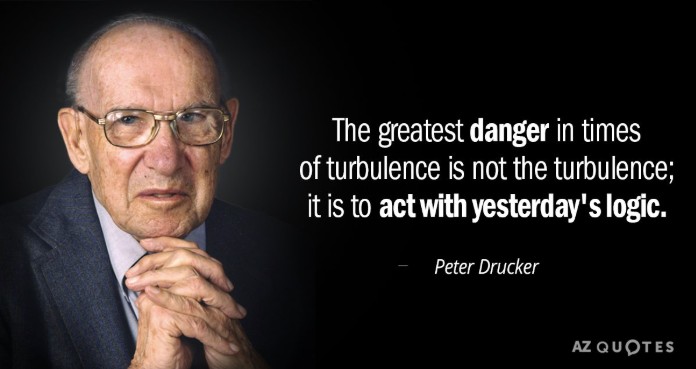
Because you cannot build a future-ready system by constantly responding to the past.
Foresighting is not about prediction.
It is about:
– scanning emerging trends
– understanding labour market direction
– anticipating workforce needs
– and designing curriculum and capability ahead of demand
In contrast, much of FE still relies on:
– lagging labour market information
– reactive qualification reform
– compressed implementation timelines
– workforce development that follows change, rather than prepares for it
The result?
A system that is always catching up.
And when systems catch up late, gaps widen.
This is particularly visible for those already facing the greatest barriers to learning and progression.
As highlighted in the Impetus Youth Jobs Gap research, disadvantage is rarely driven by a single factor.
It is compounded by qualification gaps, confidence, SEND, poverty and place.
When systems react late, those with the least margin for error are affected first.
Planning ahead is not a strategic luxury.
It is how systems prevent inequality from deepening.
National skills projections, including the UK Government Assessment of Priority Skills to 2030, point clearly towards a future where adaptability and transferable capability matter more than fixed knowledge, yet much of the system is still designed for stability rather than change.
Curriculum Is Now a Risk Function
Curriculum is no longer just about what is taught.
It is now one of the most significant risk levers in the system.
Because curriculum determines:
– whether learners can access and sustain progression
– whether staff can adapt teaching to real-world demands
– whether inclusion is consistent or variable
– whether employers can rely on the skills being developed
Under the current Ofsted approach, this is becoming increasingly visible.
Inclusion is not being judged as policy or intent.
It is being tested through:
– curriculum coherence
– teaching adaptation
– and the consistency of learner experience
Which means curriculum is now where system risk either reduces – or compounds.
If curriculum is designed with foresight, it enables progression.
If it is designed reactively, it exposes gaps.
This is also why we are increasingly seeing adaptive teaching emerge as a quality signal, not just a pedagogical choice; a shift explored further in Is adaptive teaching in Further Education becoming a key signal of quality?
Modularity Without Capability
The shift towards modularity is one of the most significant changes currently underway.
Through the Lifelong Learning Entitlement and wider reform, the system is moving towards:
– smaller units of learning
– stackable pathways
– more flexible entry and exit points
This has huge potential.
Particularly for:
– adults returning to learning
– those with disrupted educational experiences
– learners who need confidence-building steps before full qualifications
But there is a risk that is not being talked about enough.
Modularity only works if people know how to use it.
Because modular systems require:
– strong curriculum sequencing
– clear progression pathways
– confident staff judgement
– the ability to adapt learning in real time
This is not a system designed for recall.
It is a system that demands:
– application
– interpretation
– and professional judgement
If workforce capability does not evolve alongside modularity, flexibility becomes fragmentation.
And learners experience inconsistency rather than opportunity.

The Real Risk: A Growing Capability Gap
Across the sector, the same pattern is emerging.
Leaders are navigating increasing complexity.
Staff are working hard to adapt.
Learners are being offered new pathways and opportunities.
But underneath this:
Confidence is uneven.
Capability is inconsistent.
And practice is often dependent on individuals rather than systems.
These pressure points often become most visible through:
– gaps between curriculum intent and delivery
– variation in how quality assurance is applied
– differences in learner experience across teams
This pattern is not new. It mirrors what many leaders are already experiencing when core skills strategies stall in practice, despite strong intent and planning, as explored in Why core skills strategies fail to land in Further Education — and what leaders can do
This is where risk becomes visible.
Because:
Reform without capability widens gaps.
This is not just about pedagogy.
It is about system readiness.
AI is a clear example.
The conversation is often framed around tools and efficiency.
But the real issue is workforce confidence:
– knowing when to use AI
– knowing how to evaluate outputs
– knowing how to integrate it meaningfully into teaching and learning
AI does not create new problems.
It exposes existing capability gaps.
The same is true for:
– modular delivery
– inclusion expectations
– curriculum adaptation
When capability is strong, change is absorbed.
When it is not, variation increases.
And variation is where inclusion becomes fragile.
This Isn’t a Skills Shortage Problem
When employers say they can’t find the right skills…
When learners say they don’t feel ready…
When staff say confidence is low…
These are often treated as separate issues.
We’ve known this for years.
And yet the same pattern keeps showing up.
Even when unemployment rose sharply, employers still reported persistent skills shortages.
More people didn’t solve the problem because the problem was never supply. It was capability.
But they are connected.
This isn’t a skills shortage problem.
This isn’t a curriculum problem.
This isn’t even a reform problem.
It’s a capability problem and it shows up under pressure.
Systems create the conditions. People deliver the outcomes.
And right now, we are asking people to deliver a future the system hasn’t fully prepared them for.
What Future-Proofing FE Actually Requires
If FE is to move from reacting to shaping the future, five shifts are needed:
1. Curriculum as Strategy
Curriculum becomes the driver of quality, not an output of compliance.
2. Foresight as Standard Practice
Providers design ahead of demand, not behind it.
3. Workforce Capability First
Staff confidence and capability are built before change lands, not after. This includes building confidence not just in teaching, but in how curriculum, delivery and quality assurance work together in practice.
4. Modularity with Coherence
Flexible pathways are intentionally designed, not bolted on.
5. Inclusion as Infrastructure
Inclusion is embedded into curriculum and teaching, not added as support.
Because when inclusion is designed in, consistency follows.
And when consistency is present, confidence grows.
From Insight to Action
FE does not lack commitment, expertise or care.
What it lacks is the system conditions needed to consistently translate reform into practice.
And that is where risk now sits.
Not in strategy.
Not in policy.
But where expectations are rising faster than delivery can remain consistent.
Because when that gap widens:
– learner experience becomes variable
– inclusion becomes fragile
– staff confidence is stretched
– and leaders carry risk that cannot be fully mitigated through planning alone
This isn’t about adding more.
It is about understanding where your system is under pressure and how that pressure is showing up across curriculum, delivery and quality processes.
So Where Do You Start?
If future-proofing FE is about capability, confidence and coherence, then the first step is clarity.
If your system depends on individuals to ‘make it work’, it isn’t future-ready – it’s vulnerable.
So the question isn’t whether change is coming.
It’s this:
Where does your system start to break under pressure?
Because most organisations don’t have a strategy problem.
They have a translation problem.
5 Signals Your FE System Isn’t Future-Ready (Yet)
To support this reflection, I’ve pulled together a short diagnostic.
It is a practical 1-page tool designed to help you quickly identify:
– where variation is emerging
– where capability gaps are forming
– and where risk is beginning to surface
📥 Download the 5 Signals diagnostic here.
If You Want to Go Further
If these signals resonate, the next step isn’t a bigger plan.
It’s a clearer understanding of where capability needs to be strengthened.
That’s exactly what I explore with leaders through my:
Leadership Pressure Test (Risk & Capability)
A focused 90-minute diagnostic to:
– identify where risk sits
– explore where delivery becomes inconsistent
– and prioritise what will make the biggest difference
If that would be useful, feel free to get in touch.
Final Thought
Because in the end:
Systems don’t fail all at once.
They fail where capability is weakest.
And that’s exactly where future-proofing needs to start.
And if we want a system that genuinely supports opportunity, progression and inclusion, then we must ensure the people within it are equipped – not just expected – to deliver it.
Only then do we move from firefighting to foresighting.
And from reacting to shaping what comes next.