
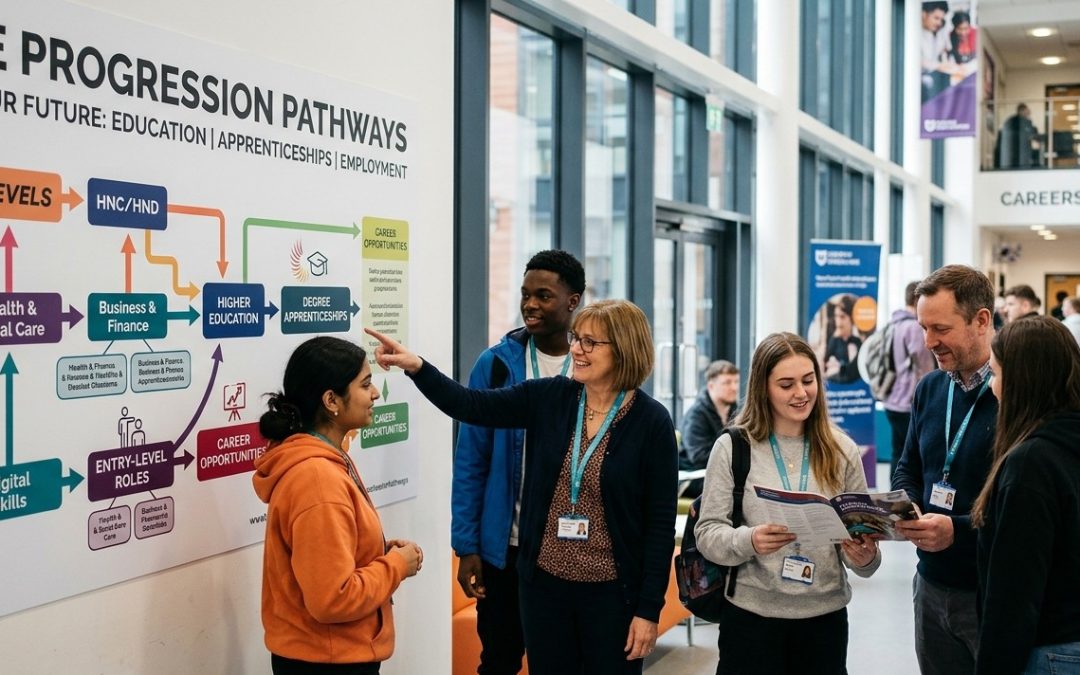
In this article, Christine explores why participation in further education is increasingly becoming a system capability issue rather than simply a learner engagement issue and what organisations can do to create the conditions that enable learners to belong, participate and progress.
—————————————————————————
Reducing the number of young people who are not in education, employment or training (NEET) remains a major policy priority. The Youth Guarantee, Skills England’s focus on participation, and ongoing discussions around work readiness all reflect a shared concern: too many people are struggling to successfully navigate education, training and employment pathways.
The conversation often focuses on the individual.
How do we motivate learners?
How do we increase aspirations?
How do we encourage participation?
These are important questions. However, they risk overlooking something equally important.
Participation is rarely determined by motivation alone.
It is shaped by the systems learners experience every day.
Recent discussions around the Youth Guarantee, work readiness, Skills England priorities and NEET reduction often focus on what happens when participation is missing.
We notice it when learners disengage.
We measure it when attendance falls.
We discuss it when progression stalls.
But by that point, participation has often been breaking down for some time.
The more useful question may be this:
What conditions make participation possible in the first place?
The evidence emerging from careers education, transitions, inclusion, employer engagement and workforce development increasingly points towards a different conclusion. Participation is not simply a learner issue to solve. It is heavily influenced by organisational capability.
If we want more learners to participate, progress and succeed, we need to look beyond individual interventions and examine whether our systems are creating the conditions that make participation possible.
As explored previously in Level 1 Reform: Why Post-16 Progression Matters More Than Ever, progression challenges often become most visible when learners struggle to navigate pathways and next steps successfully.

Participation Is Not The Same As Attendance
Participation is often measured through visible indicators such as attendance, retention or completion.
Yet participation is much broader than simply being present.
A learner can attend every lesson and still feel disconnected.
They can be physically present whilst lacking confidence to contribute, ask questions, engage in discussions or take risks in their learning.
This distinction matters.
Many barriers to participation are not immediately visible. Learners may be managing anxiety, uncertainty about their future, previous negative educational experiences or concerns about getting things wrong.
This is particularly relevant when considering maths anxiety, literacy confidence and digital confidence.
Many adults and young people can recall experiences where they felt embarrassed, exposed or judged because they struggled with maths, reading, writing or technology. These experiences often shape future participation long after the original learning experience has ended.
Participation is therefore not simply about access.
It is about
– confidence.
– belonging.
– feeling able to engage without fear of failure.
For learners with SEND or those who are neurodiverse, these barriers can be even more significant if learning environments are not designed with inclusion in mind.
The challenge for organisations is not simply getting learners through the door.
The challenge is creating environments where learners feel able to participate once they arrive.
What The Evidence Is Telling Us
Across multiple reports and publications, a consistent theme is emerging.
Progression is rarely determined by qualifications alone.
Learners are more likely to succeed when they can see where they are going, understand how opportunities connect together and feel confident navigating the choices available to them.
Research into careers education, including the DfE’s Careers Guidance and Access for Education and Training Providers (2025), highlights the importance of employer encounters, meaningful careers guidance and exposure to future opportunities.
Skills England has similarly emphasised the importance of participation, progression and workforce readiness.
Meanwhile, recent discussions around transitions continue to highlight how many learners struggle to navigate the move between education, training and employment.
Taken together, the evidence suggests that participation is strongly influenced by visibility and connection.
Learners need to understand:
– what opportunities exist
– how learning connects to future goals
– what progression routes are available
– how employers value different skills and experiences
– where support can be accessed when challenges arise
The issue is rarely a lack of aspiration.
More often, it is a lack of visibility, confidence or connection.
Participation Sits Upstream Of Progression
Much of the current policy conversation focuses on destinations, progression and reducing NEET numbers.
These are important outcomes.
However, outcomes are often shaped by what happens much earlier in the learner journey.
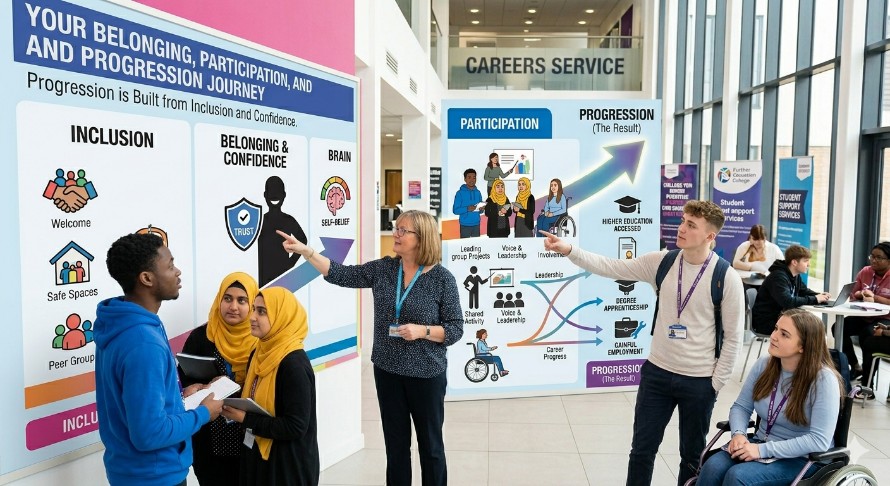
Before learners progress, they need to participate.
Before they participate, they need to feel they belong.
Before they belong, they need to experience environments where they feel safe, supported and capable of succeeding.
This is why participation deserves greater attention.
It sits upstream of progression.
When participation weakens, progression becomes less likely.
When progression becomes less likely, the risk of disengagement increases.
By the time a learner appears within NEET statistics, the conditions supporting participation may have been deteriorating for months or even years.
This is one reason why reducing NEET risk cannot be separated from inclusion, workforce capability, transitions, CEIAG and curriculum design.

Why Transitions Create Risk
Transitions remain one of the most significant pressure points within the education and skills system.
Whether moving from school to college, between programmes, into apprenticeships or into employment, transitions require learners to navigate uncertainty.
For some learners, these transitions are relatively straightforward.
For others, they can become points where participation begins to break down.
Disadvantaged learners, learners with SEND and neurodiverse learners often face additional barriers during transition periods. Information may be fragmented. Expectations may change. Support mechanisms may look different.
At exactly the point where confidence is needed most, learners can find themselves navigating unfamiliar systems.
Recent evidence suggests that transitions are often where inequalities become most visible.
This matters because participation and progression are closely connected.
If learners struggle to see their next step, understand their options or access appropriate support, participation can gradually reduce.
The eventual outcome may be disengagement.
However, the root cause often sits much earlier within the learner journey.
CEIAG Is Participation Infrastructure
Too often careers education, information, advice and guidance (CEIAG) is viewed as a standalone activity.
A guidance interview.
A careers event.
A compliance requirement.
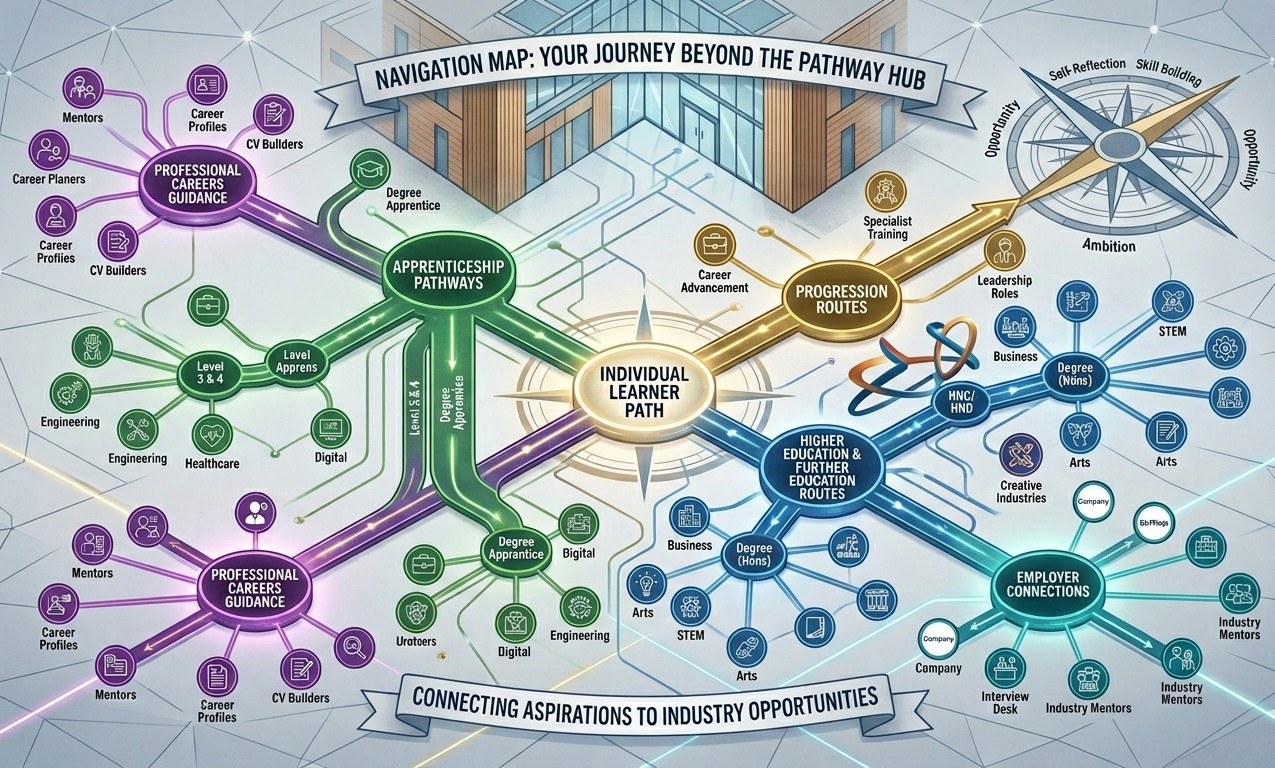
In reality, effective CEIAG functions as participation infrastructure.
It:
– helps learners understand opportunities.
– increases visibility of progression routes.
– strengthens confidence and decision-making.
– helps learners connect learning with future possibilities.
As explored in Beyond Careers Advice: CEIAG as the New Infrastructure of Inclusion and Visibility, careers education is increasingly becoming a navigation system rather than a standalone service.
When employer encounters, workplace experiences and careers conversations are embedded throughout the learner journey, participation becomes easier because learners can see the purpose behind what they are doing.
This is particularly important for learners who may not have strong professional networks, family experience of particular industries or clear visibility of progression routes.
Learners are more likely to participate in opportunities they can see and understand.
The role of CEIAG is not simply to provide information.
It is to help learners navigate increasingly complex pathways with confidence.
Core Skills Remain Participation Capabilities
Discussions about work readiness often focus on technical skills and occupational competence.
However, participation frequently depends upon something more fundamental.
Maths, English and Digital Skills remain among the most important participation capabilities learners can develop.
These capabilities influence confidence, communication, problem-solving, decision-making and the ability to navigate everyday life.
They also influence progression.
A learner who lacks confidence interpreting information, communicating effectively, completing digital tasks or managing everyday maths may be less likely to engage fully with opportunities that become available.
The challenge is that these skills are often viewed as separate subjects rather than enabling capabilities.
When Maths, English and Digital Skills are contextualised, applied meaningfully and embedded within vocational learning, learners are more likely to recognise their relevance.
When they are disconnected from real-life application, participation can suffer.
The goal should not simply be qualification achievement.
The goal should be helping learners develop the confidence and capability to participate successfully in learning, work and life.
Staff Confidence Shapes Learner Participation
One of the strongest themes emerging across inclusion, careers education, adaptive teaching and workforce development is the importance of staff confidence.
Confident staff are more likely to:
– adapt learning effectively
– support learners experiencing anxiety
– facilitate meaningful careers conversations
– identify participation barriers early
– respond appropriately to SEND and neurodiversity
– help learners navigate transitions successfully
When staff feel uncertain, participation can unintentionally become more difficult.
This is not because staff lack commitment.
It is because confidence influences professional judgement, responsiveness and the ability to adapt in the moment.
As explored in Why Does Adaptive Teaching Break Down Under Pressure in Further Education?, workforce confidence is often the factor that determines whether good intentions become meaningful learner experiences.
Participation therefore depends not only on learner confidence but also on workforce confidence.
If we want learners to engage, contribute and progress, we must invest in the capability of the people supporting them.
Participation Is An Organisational Capability
This is where the conversation shifts.
Participation cannot be delegated to a single team, project or intervention.
It emerges from the interaction between leadership, curriculum design, inclusion, careers education, employer engagement and workforce capability.
It is influenced by:
– the visibility of progression pathways
– the quality of transitions
– the confidence of staff
– the accessibility of support
– the effectiveness of CEIAG
– the integration of Maths, English and Digital Skills
– organisational approaches to inclusion and belonging
When these elements work together, participation becomes more likely.
When they operate in isolation, learners often experience fragmentation.
As discussed in Why Is a Whole Organisation Approach Still So Difficult to Embed in FE?, complex challenges rarely sit within a single team or department.
This is why participation should be viewed as an organisational capability rather than an individual responsibility.
The most effective organisations do not simply encourage participation.
They create the conditions that make participation possible.
This isn’t a participation problem.
It’s a capability problem.
Participation is simply where the capability gap becomes visible.
Final Reflection
The growing focus on NEET reduction, work readiness and participation is both necessary and welcome.
However, there is a risk in assuming that participation can be solved through individual interventions alone.
The evidence increasingly suggests otherwise.
Learners participate when:
– they feel they belong.
– progression is visible.
– support is accessible.
– staff are confident.
– systems are coherent.
If we genuinely want to improve participation, reduce NEET risk and strengthen progression, we need to look beyond programmes and initiatives and focus on the capability of the systems learners experience every day.
As explored recently in What Does AI Readiness Actually Look Like in Further Education?, the same theme continues to emerge: capability determines how effectively organisations respond under pressure.
Because participation rarely succeeds by accident.
It is usually the result of organisations that have intentionally created the conditions in which learners can belong, participate and progress with confidence.
How Creating Excellence Can Help
Many organisations already recognise the importance of participation, progression and inclusion. The challenge is often translating those ambitions into consistent practice across curriculum, careers education, workforce development and learner support.
Whether the focus is CEIAG, transitions, SEND, Maths, English and Digital Skills, employer engagement or workforce confidence, the common thread is organisational capability.
Creating Excellence works with providers, colleges, local authorities and training organisations to strengthen the conditions that enable learners to belong, participate and progress with confidence.
If your organisation is exploring how participation, progression and inclusion connect to quality improvement, workforce capability and learner outcomes, I’d be happy to start a conversation.
Trackbacks/Pingbacks