

Confidence in Maths, English and Digital Skills is not built in isolation. Christine explores why inclusion depends on a whole-organisation approach — where responsibility, culture and curriculum design work together to support progression for everyone.
Across the FE and skills sector, inclusion is firmly back at the centre of conversations about quality, curriculum and leadership. It features prominently in Ofsted’s expectations and in provider self-assessment, particularly around learner experience, confidence and progression.
Yet when it comes to Maths, English and increasingly Digital Skills, responsibility is still too often located in one place, with specialists, rather than understood as a whole-organisation approach to Maths, English and Digital Skills.
This matters now more than ever.
As requirements shift and adult provision faces renewed pressure, confidence gaps are becoming more visible rather than less. And when responsibility for core skills becomes unclear, capability is quietly assumed. Assumed skills are where exclusion takes hold.
Specialist delivery matters — but inclusion cannot stop there
There is no question that specialist Maths, English and Digital Skills practitioners play a critical role in adult education and apprenticeships.
In many providers, specialists are highly adaptive, deeply aware of learner anxiety and skilled in inclusive approaches. They understand that confidence, relevance and trust are essential, particularly for adults whose previous experience of education may not have been positive.
Where challenges persist is not just aligned to pedagogy, but sits more with transfer.
Even the strongest specialist delivery can struggle to make learning meaningful beyond the classroom. Adult learners are often left asking, sometimes silently:
“Why does this matter in my job, my life, or my future?”
When Maths, English and Digital Skills are experienced as something that sit only within specialist sessions, learners can struggle to recognise their relevance elsewhere. Engagement drops not because teaching is weak, but because meaning is unclear.
This is not a failure of specialists. It is a signal that inclusion cannot sit in one part of an organisation alone.
Unconscious competence in vocational learning: a hidden inclusion issue
The most significant barrier to embedding Maths, English and Digital Skills often sits outside specialist delivery altogether.
In vocational and apprenticeship settings, many educators are industry experts. They use Maths, English and Digital Skills constantly: interpreting data, estimating, reading technical documentation, communicating precisely, navigating digital systems.
But because these skills are so embedded, they are often invisible.
This is unconscious competence and it creates a serious inclusion challenge.
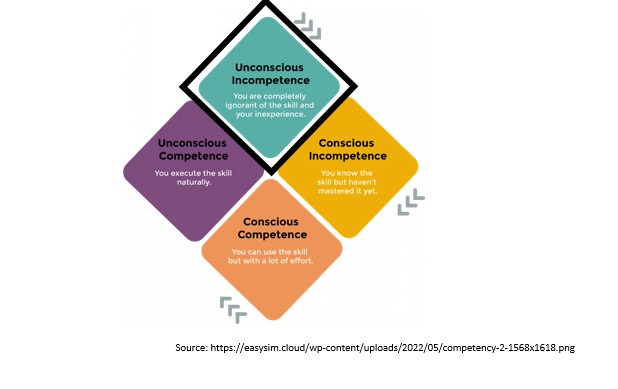
When educators do not explicitly name the skills underpinning vocational practice, learners cannot see the thinking involved. For adults with fragile confidence, this reinforces the belief that Maths and English are either irrelevant or “not for people like me”.
The result is a damaging contradiction:
- skills are essential, but unnamed
- required, but unsupported
- assumed, but not developed.
An inclusive curriculum cannot rely on learners making these connections alone.
From specialist subjects to shared organisational capability
A whole-organisation approach to Maths and English requires a shift in mindset.
Inclusion is not just about adapting provision for particular groups. It is about designing curriculum, culture and practice so that development is normal for everyone.
This aligns strongly with well-established educational principles and with the development of expert learner behaviours such as confidence, agency and self-belief — where learners understand not just what they are doing, but why it matters and how to apply it beyond the classroom.
- Growth mindset reminds us that capability develops over time, not through labels.
- Self-efficacy shows that confidence grows when learners understand how they succeed.
- Assessment for Learning positions feedback as guidance rather than judgement.
- Emotional intelligence helps educators recognise anxiety as information, not resistance.
Together, these reinforce a simple truth: confidence is not a prerequisite for learning, it is an outcome of inclusive design.
When Maths, English and Digital Skills are treated as shared responsibility, inclusion becomes structural rather than remedial.

What a whole-organisation approach looks like in practice
This responsibility plays out differently across an organisation, but it belongs to everyone.
For learners
Skills are not presented as tests of ability, but as tools for work, life and progression. Everyone is developing and checking, questioning and uncertainty are normalised.
For educators (specialist and vocational)
The focus shifts to making invisible skills visible. Maths, English and Digital Skills are named explicitly within vocational contexts and learning is modelled openly.
For managers and quality leads
This is where purposeful curriculum design and leadership coherence matter most, ensuring Maths, English and Digital Skills are treated as shared capability rather than discrete interventions.
For senior leaders
Culture matters. What is prioritised, resourced and talked about shapes belief. A whole-organisation mindset signals that development never stops — for staff or learners.
For employers
Confidence in communication, numeracy and digital skills underpins productivity, adaptability and progression. Skills confidence supports sustained performance, not just entry into work.
This approach does not require everyone to teach Maths and English.
It requires everyone to value, recognise and reinforce them.
Why this matters now for inclusion and quality
As policy priorities evolve and adult provision becomes less visible in national narratives, there is a real risk that Maths, English and Digital Skills quietly become assumed rather than developed.
But skills that underpin participation in work, learning and society cannot be optional if inclusion is taken seriously.
A whole-organisation approach to Maths and English is not about increased compliance. It is about clarity:
- clarity of purpose
- clarity of responsibility
- clarity of belief.
Confidence grows when systems make development visible, supported and expected. This echoes wider conversations about confidence, judgement and systems thinking in FE , where learning is designed to support long-term capability rather than short-term compliance.

Inclusion starts with shared responsibility
Before we talk about curriculum alignment, CEIAG, AI readiness or system reform, we need this shared understanding.
An inclusive organisation does not ask who Maths, English and Digital Skills are for.
It assumes they are for everyone and designs culture, curriculum and confidence accordingly.
If you are reviewing your curriculum, quality strategy or approach to inclusion in 2026, consider this question:
Where does responsibility for Maths, English and Digital Skills really sit in your organisation and what messages does that send to learners and staff?
Get in touch if you’d like support exploring a whole-organisation approach to Maths, English and Digital Skills through curriculum design, CPD or quality review.