
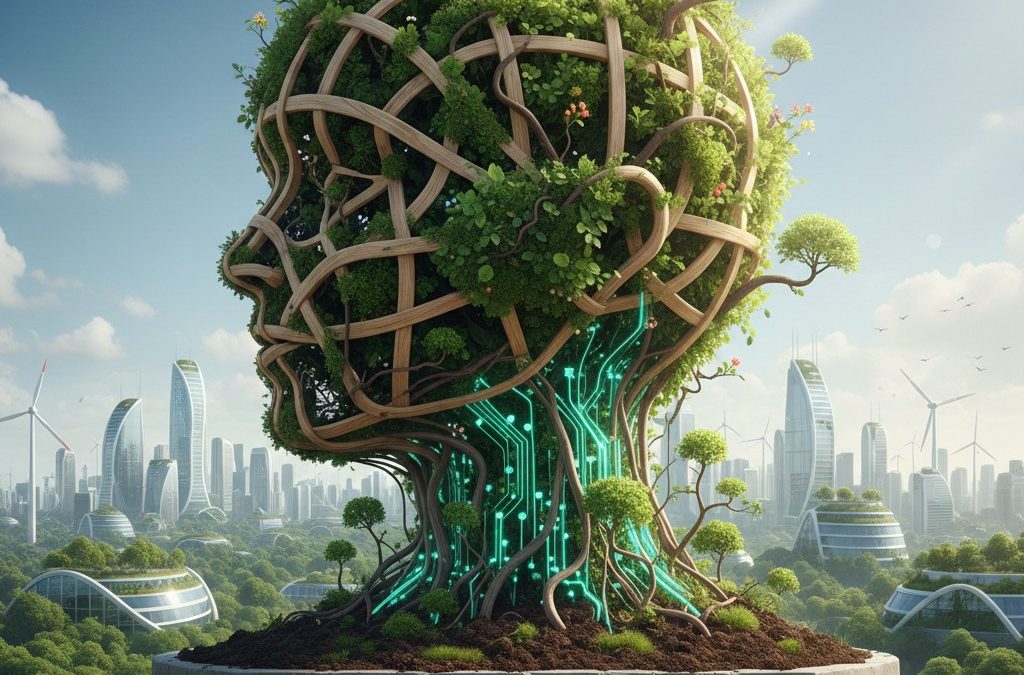
Sustainability is becoming one of the defining priorities of our time.
With the Clean Energy Jobs Plan, Skills England reforms, LSIP expectations and the shift towards modular qualifications, the UK skills landscape is unmistakably green. Further Education (FE) sits right at the centre of this transition, preparing young people, adults and employers for a future shaped by environmental, social and economic change.
But one truth keeps resurfacing across policy papers, events and sector conversations:
We cannot build a sustainable future through policy alone. We need a green mindset in FE.
Yet across the sector, that mindset is still emerging. Three-quarters of educators report feeling unprepared to embed sustainability1. Employers want to engage but don’t always know how. And young people, increasingly anxious about the future, want to make a difference but cannot always see where they fit.
The good news is this: FE is already contributing powerfully to sustainability.
We just haven’t always named it.
This article explores what a green mindset in FE really means, why it matters and how we can build it together, through clarity, confidence, curriculum and culture.
Why the UK Skills System Needs a Green Mindset Right Now
The Government’s Clean Energy Jobs Plan sets out five priorities vital to the future workforce:
- A clear and stable talent pipeline
- Investment in workforce development
- Transferable skills that support career mobility
- Quality green jobs
- Collaboration across government, industry and training providers.
Alongside this, Skills England, the Skills White Paper and LSIPs reflect a shared reality:
The UK’s future economy is a green economy and FE must be equipped to deliver it.
But policies alone cannot create the mindset, confidence or cultural coherence needed to turn strategic ambition into classroom reality.
A green mindset in FE transforms sustainability from an “initiative” into a way of thinking:
- shaping curriculum intent
- informing teaching practice
- influencing employer engagement
- strengthening CEIAG
- building learner identity and belonging.

What Do We Mean by a ‘Green Mindset’ in FE?
A green mindset is not a themed week or an enrichment activity. It is a lens that helps educators and learners understand the world they are part of and their role in shaping it.
A green mindset recognises that:
- every job has sustainability dimensions
- every subject contributes to sustainable development
- every learner is preparing for a changing world
- every educator can help build preparedness, confidence and agency.
This mindset emphasises:
- systems thinking
- critical thinking
- digital confidence
- social justice and inclusion
- identity and belonging.
As one student voice contributor put it: “The gap isn’t knowledge. It’s preparedness.”
The Educator Mindset Gap: Why Confidence Matters More Than Content
During the recent Green Mindset Micro Collective event in Manchester, one statistic landed with weight: 75% of educators aren’t confident in embedding sustainability in their teaching.
This is not a lack of motivation. It is a lack of:
- clarity around what “sustainability” means in their subject
- time for CPD and collaboration
- subject-specific examples and case studies
- employer guidance and real-world relevance
- consistent language and frameworks
- specialist pedagogical pathways.
Sustainability will not scale through templates. It will scale through people: confident, supported and valued.
Curriculum Is Culture: No Subject Exists in a Vacuum
When the QAA embedded the UN Sustainable Development Goals (SDGs) into subject benchmark statements, it signalled a big shift:
Sustainability is now part of curriculum design not an optional extra.
This matters for FE because:
- qualifications will increasingly expect sustainability literacy
- HE progression routes assume this level of understanding
- all subjects, pathways and apprenticeships contribute to sustainable futures
- learners need both skills and identity to see themselves as citizens of a rapidly changing world.

Where FE Already Supports the SDGs (More Than You Think)
One of the most empowering mindset shifts is helping educators see that they already deliver sustainability every day, they just haven’t named it.
SDG 3: Good Health and Wellbeing
FE pathways: Health & Social Care, Early Years, SEND, Sport, Wellbeing, Foundation Learning
Examples: promoting healthy living, supporting vulnerable adults, mental health awareness, safeguarding, infection control
SDG 4: Quality Education
FE pathways: Maths, English, Digital Skills, ESOL, ACL, apprenticeships, SEND support
Examples: improving literacy and numeracy, overcoming maths anxiety, tackling exclusion, building learner identity
SDG 8: Decent Work and Economic Growth
FE pathways: All apprenticeships, employability, business, digital
Examples: professional behaviours, ethical operations, resource management, problem-solving at work
SDG 9: Industry, Innovation and Infrastructure
FE pathways: Engineering, Construction, Digital, Logistics, Manufacturing
Examples: efficient design, safe construction, data for decision-making, automation and digital transformation
SDG 12: Responsible Consumption and Production
FE pathways: Hospitality, Catering, Hair & Beauty, Business, Childcare, Creative
Examples: reducing food waste, sustainable sourcing, budgeting, recycling and reuse
SDG 13: Climate Action
FE pathways: Cross-college (maths, English, digital)
Examples: analysing energy data, persuasive writing, digital efficiency, AI modelling
SDG 17: Partnerships for the Goals
FE pathways: Employer engagement, LSIPs, community partnerships
Examples: local green skills projects, employer-led curriculum, community sustainability initiatives
This clarity changes everything:
- Educators see themselves in the sustainability story.
- Learners see relevance and agency.
- Employers see purpose and partnership.
- Sustainability becomes cultural, not seasonal.
Why Policy Alone Won’t Create Culture Change in FE
Sustainability embeds through:
- relevance
- values
- meaning
- identity
- shared purpose
- relationships
- visible small wins
- trust.
Culture is built in everyday moments: in staffrooms, planning sessions, learner conversations and community partnerships.

Practical Actions FE Can Take to Build a Green Mindset (Starting Tomorrow):
- Cut the jargon and use shared language
- Build sustainability into curriculum intent
- Offer CPD that prioritises practice
- Engage employers through relevance
- Use student voice strategically
- Celebrate “green confetti” wins
- Treat sustainability as cultural, not technical.
Sustainable Futures Need Sustainable Mindsets
Sustainability cannot be taught unless it is believed, lived and shared.
FE has enormous power to shape how young people see themselves and their future, to build confidence, identity and belonging, not just competence.
Policy sets the direction.
Funding shapes the landscape.
But only mindset will deliver the change our learners deserve.
How ready are we — not just to teach differently, but to think differently?
If your organisation wants support with embedding sustainability, curriculum design or educator confidence, I can help.
Get in touch for consultancy, CPD or strategic support.
Trackbacks/Pingbacks