
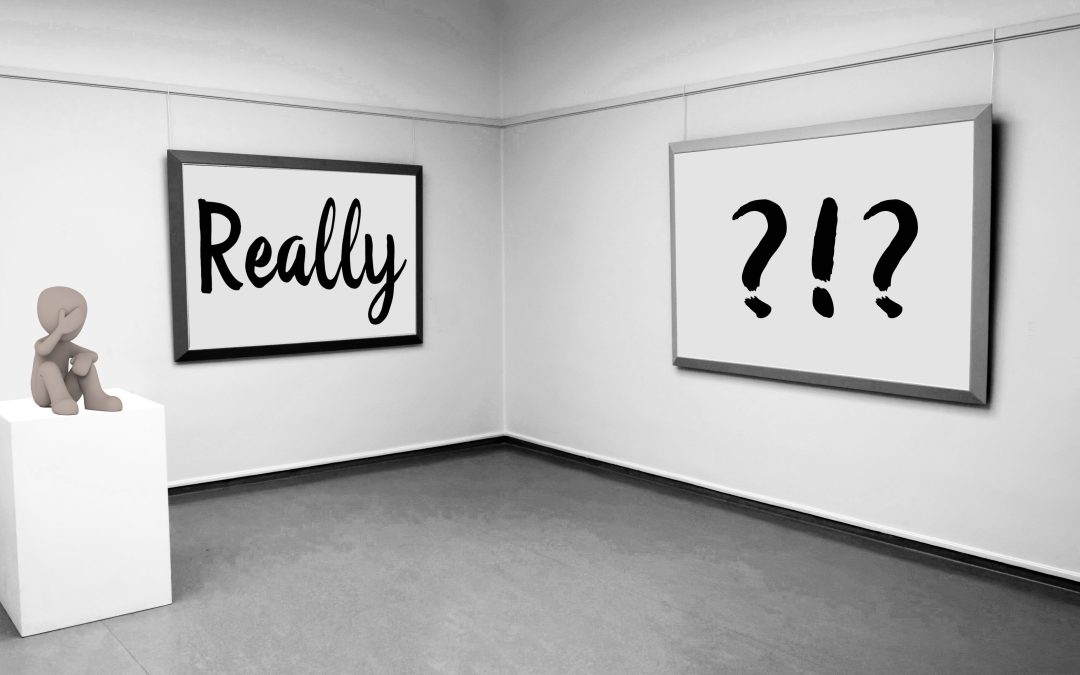
Why Do Simple Things Sometimes Feel Hard? It’s all about Learner Confidence.
Christine shares a story about how something so simple felt so hard. She uses it to illustrate what everyday moments can teach us about learner confidence in Maths, English, and Digital Skills in post-16 education.
Last night, just before bed, I went to do something I’ve done twice a day for decades: clean my teeth.
It’s a routine that usually needs no thought. Pick up the toothbrush, press the button, off you go.
Except this time, the toothbrush was dead. Out of charge. Completely unresponsive.
At the same moment, a couple of items fell off the shelf. Nothing dramatic, just enough to break the flow. And suddenly, there I was thinking:
“Really? Why is something that should be so easy suddenly so difficult?”
It wasn’t a big deal. I plugged it in, sorted the shelf, carried on.
But the feeling stuck with me, that momentary irritation, the “oh come on,” the sense of being thrown when I wasn’t expecting to think.
And it reminded me of something bigger. Something I see every day in post-16 education, apprenticeships and adult learning.
Sometimes the challenge is not the task. It’s the disruption.
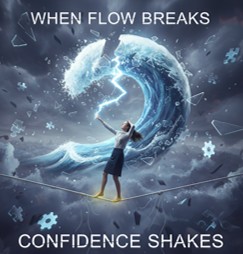
When Flow Breaks, Learner Confidence Shakes
Psychologists sometimes refer to this as a disruption of cognitive flow. When we’re in automatic mode, the brain conserves energy. Everything feels smooth, familiar, manageable.
But the moment something interrupts that flow — a dead battery, a changed layout, a missing button — our brain has to switch from automatic to problem-solving.
And that shift can feel surprisingly heavy.
It’s not the difficulty of the task. It’s the sudden need for effort when we weren’t expecting any.
And for many adults, this is their daily reality in Maths, English and Digital learning.
“I Should Be Able to Do This”: Learner Confidence and the Weight of Expectation
Adults carry a quiet pressure around certain skills.
We hear it constantly:
- “I should be able to work this out.”
- “It’s only percentages — why can’t I remember?”
- “I know I learned this at school, I just can’t do it now.”
- “Everyone else seems to cope with the digital stuff.”
So when something doesn’t work instantly — when the method looks unfamiliar, or the instructions are unclear, or the tech glitches — that same emotional spike hits:
Irritation → embarrassment → self-doubt → avoidance
The reaction isn’t logical. It’s human.
Just like my toothbrush moment, only magnified.
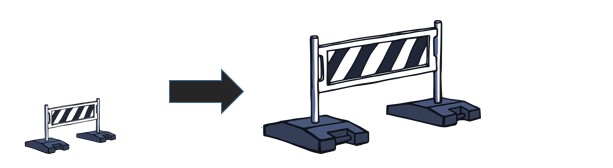
Tiny Barriers Become Big Barriers
A small disruption can feel like a big problem when confidence is fragile.
In learning, these “tiny barriers” often look like:
- the system logging them out
- a password they can’t remember
- a fraction that looks unfamiliar
- a method taught differently to how they were taught at school
- an online form that won’t save
- a piece of jargon they’ve never heard
- a calculator button they can’t find
- a worksheet that uses unfamiliar symbols.
These aren’t academic barriers. They are emotional barriers, and they show up first.
Before the learning even begins.
Why Learner Confidence Matters in Post-16 Education and Apprenticeships
In FE and Skills, especially with adults, apprentices, returners, ESOL learners and those who’ve been disengaged or excluded, these moments shape everything:
- Belonging comes before learning
If a learner feels foolish or exposed, learning shuts down.
This aligns with the sector shift towards Belong – Achieve – Thrive.
- Confidence is the gateway skill
Before Maths.
Before English.
Before Digital.
Before Employability.
Confidence opens the door.
- Emotional load matters just as much as curriculum load
If something that “should be simple” feels overwhelming, learners internalise that as failure.
- “Avoidance” isn’t laziness, it’s self-protection
If adults don’t feel psychologically safe, they delay tasks that trigger shame.
- Small design changes can remove big barriers
A clearer explanation.
A step-by-step model.
A quick demonstration.
A chance to rehearse.
A visual prompt.
A familiar context.
These aren’t add-ons. They are inclusive learning design.
The Bigger Lesson in Learner Confidence: We Are All Vulnerable to Micro-Disruptions
We often forget this as educators, leaders and trainers.
But if a flat toothbrush can momentarily knock us off balance with our experience, our confidence, our daily routines imagine what it feels like for a learner who already believes:
“Maths isn’t for me.”
“I’m rubbish with technology.”
“My English was never good enough.”
A tiny disruption for us can be a major barrier for them.
This awareness doesn’t just make us better teachers. It strengthens our curriculum. It deepens belonging. It builds cultures of confidence rather than compliance. And it reminds us that learning is human, not mechanical.
Creating Spaces Where Learning Feels Easy Again
If the answer to “why is this suddenly hard?” is often “because I didn’t expect a disruption,” then the solution is simple:
Design learning where unexpected moments feel manageable, not threatening. Where learners feel supported, not judged.
Where mistakes are normal.
Where confidence is nurtured.
Where Maths, English and Digital Skills are demystified.
Where people feel they belong.
Because when people feel they belong, learning becomes easier.
The flow returns.
The fear dissolves.
And the sentence shifts from:
“This should be easy… why can’t I do it?”
to
“This is new… but I can figure it out.”
That’s the transformation the FE and Skills sector is capable of one tiny, everyday moment at a time.

So the real question is this:
What tiny, everyday barriers might be holding your learners back and what one small change could make their learning feel easier tomorrow?
Trackbacks/Pingbacks